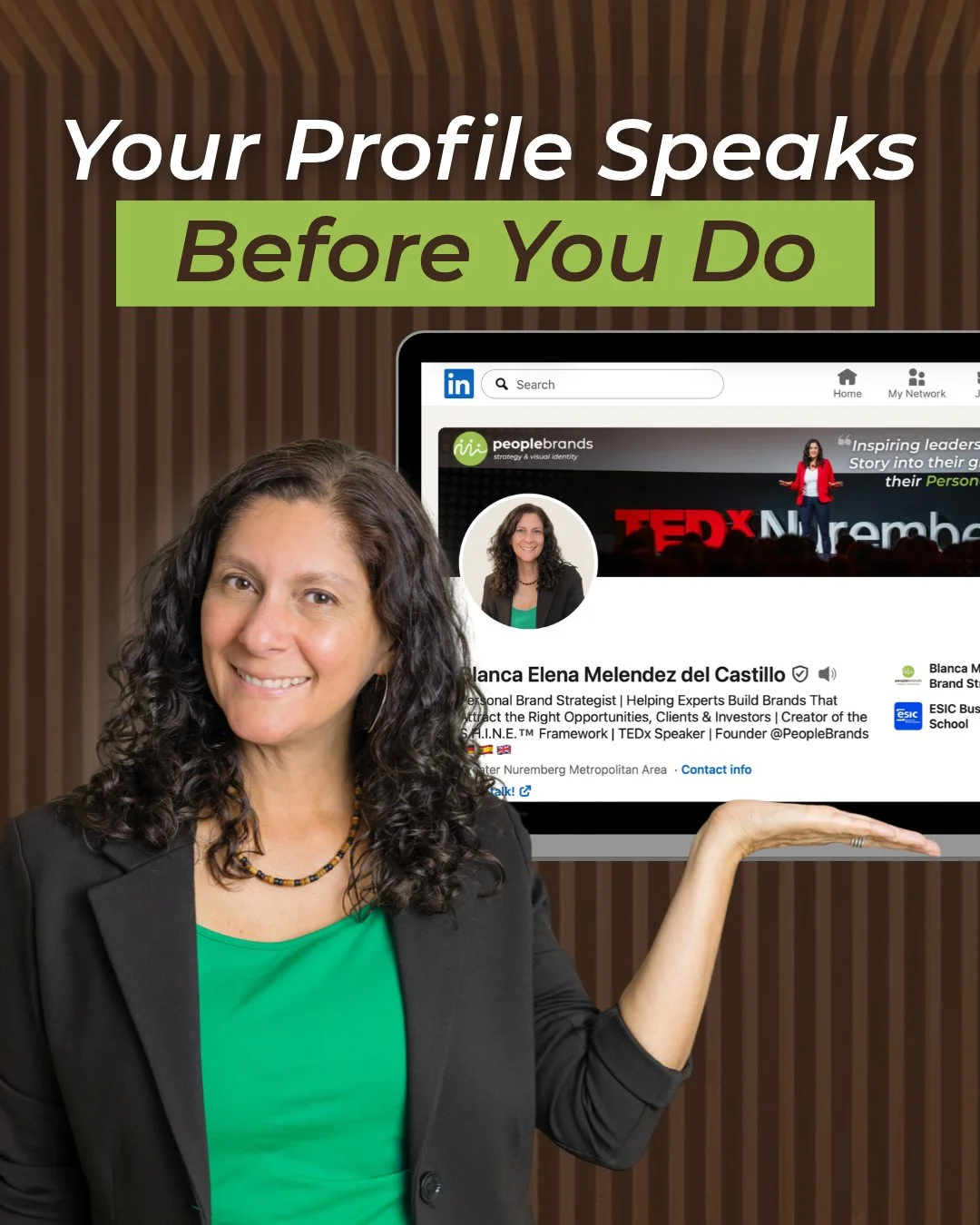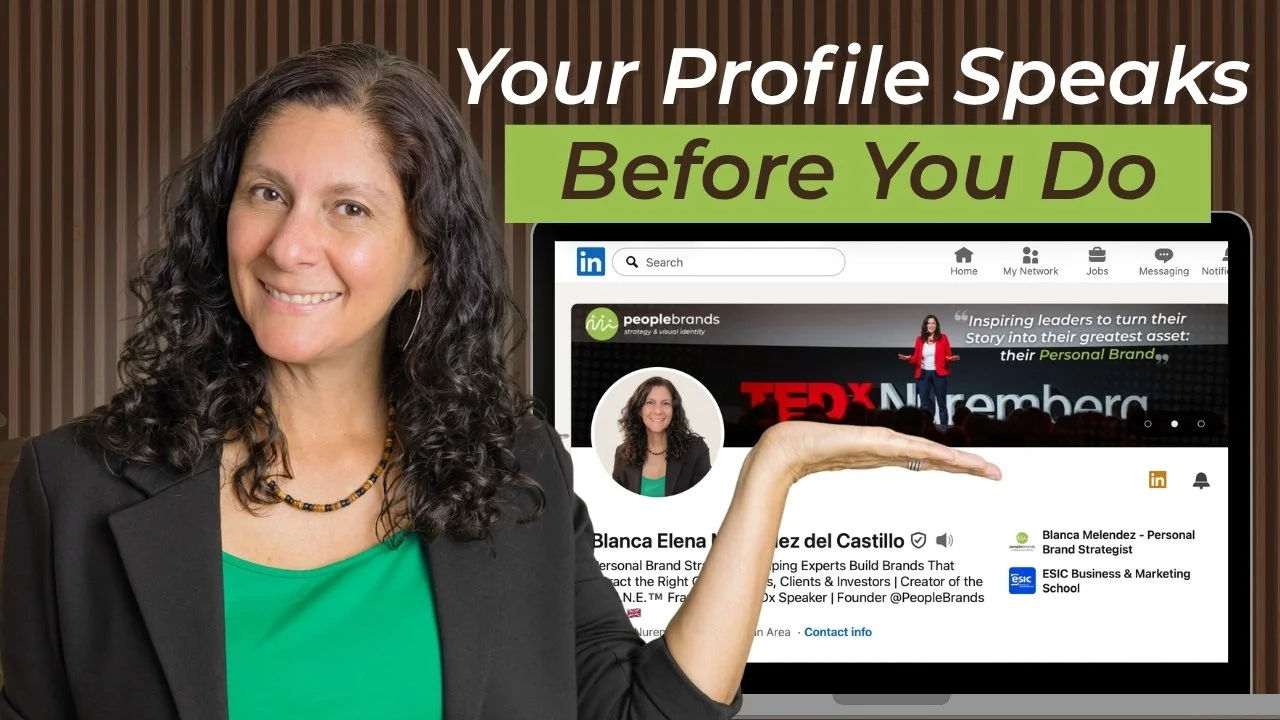
Someone just recommended you… great!!! …or is it?
Maybe they found you while searching for help with a problem... and your name came up.
Either way, they won't contact you yet.
They look you up first.
And what they find on your LinkedIn profile decides whether they reach out... or quietly move on to someone whose profile made them look like the person who can solve their problem.
What should your LinkedIn profile do?
It should help a stranger understand, within moments, what you do, who you help, why they can trust you, and how to take the next step.
For coaches and consultants, that makes your profile much more than a digital résumé. It works like a small website. And for a Personal Brand on LinkedIn, it is the page everything else points to... every post, every comment, every connection request sends people there.
This is also where the income comes in. By the time someone books a call with you, they have usually looked at your profile and decided you might be the right person. When the profile is clear, the people who contact you already understand what you do. You spend less time explaining your value, and more of your calls are with people who are a good fit for what you charge.
Why does positioning come before design?
A visitor should quickly understand what you do, who you do it for, and which problem you help solve. That message needs to stay the same across your whole profile.
If it isn't clear yet, a polished banner and a professional photo won't fix it. I see experienced experts redo their headshot and rewrite their About section again and again, and it still doesn't land... because design was never the problem.
Donald Miller says it in five words in Building a StoryBrand: "If you confuse, you'll lose." A visitor who has to work out what you do will often just move on. Customers don’t care about you, they care first about what YOU can DO FOR THEM!
So start there. Before you touch a single section, write one sentence: who you help and what changes for them when you do.
Which parts of your profile should work together?
Start with what people see first.
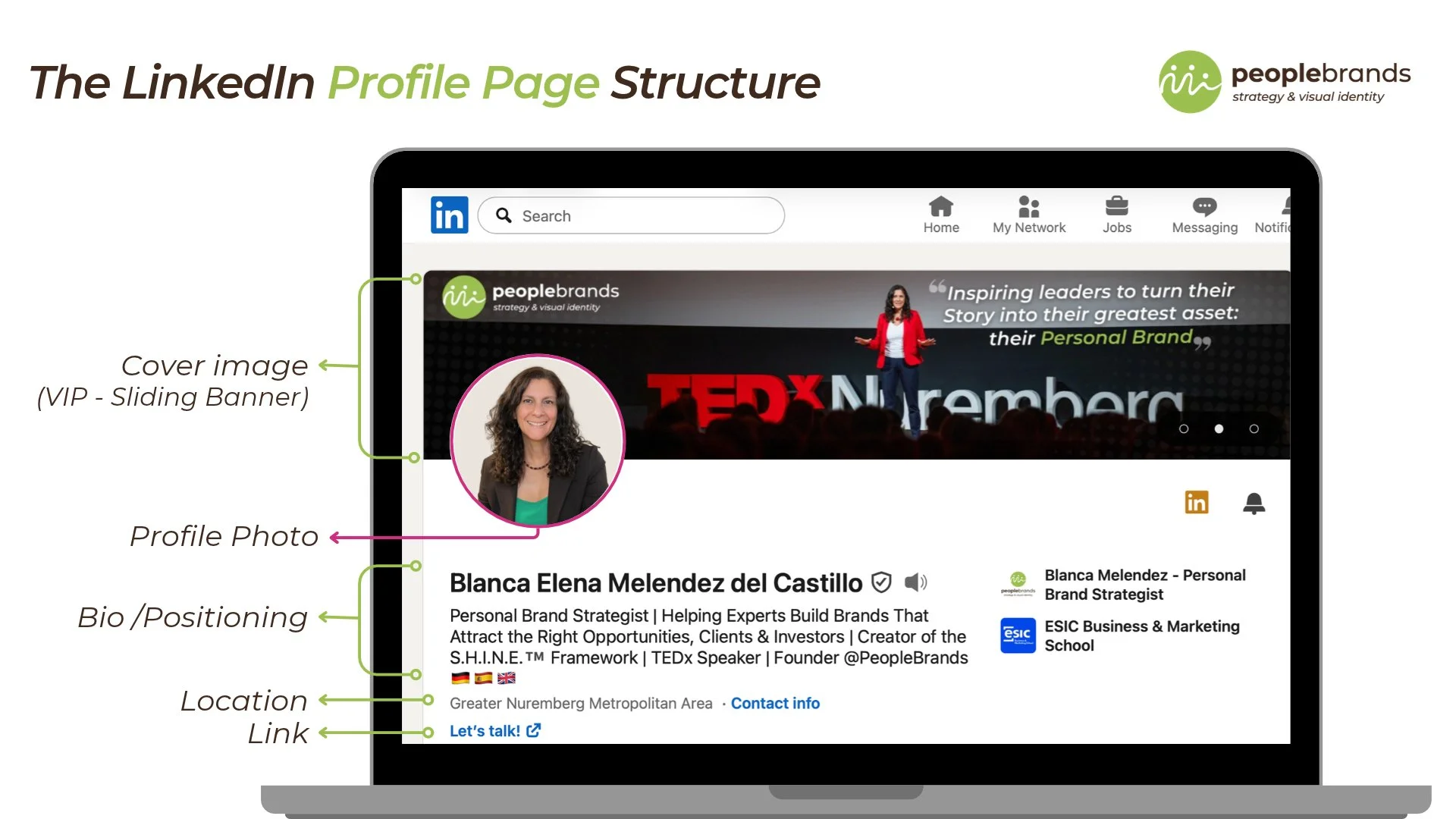
Banner: use the space to show the problem you solve or what you offer. This is like in Real Estate: prime location.
Photo: choose a professional, straightforward photo that fits your industry.
Headline: explain what you do and who you help, then add credentials where they strengthen trust.
About section: lead with the problem you solve, explain how you help, and add the experience that supports your credibility.
Together, these should make it easy for a potential client to think: "This person may be able to help me."
How do you make your services and next step easy to find?
LinkedIn has a Services section, but it is built around standard service categories and a short description. A tailored offer often needs more room than that. So consider adding a clear visual that explains your services in your own words.
Then look at your Featured section. It can hold posts, articles, links and media, which makes it the place to guide visitors to their next step: your offer, your website, your booking page, or a post that shows how you think.
Ask yourself two questions. What should a visitor see here? And where do I want them to go next?
What should your Experience section say?
Your Experience section can do more than list job titles.
If you run your own business, create a company page and link your role to it by choosing the page from the dropdown when you add the position. Once the page has a logo, it shows up next to your role, and visitors can click through to your business.
Then add the projects that matter, and explain what you did and what it taught you about helping clients now. Don’t limit yourself to only adding the job title, give us more information to understand how your experience has been built.
What does this look like in real life?
A client of mine is a founder who sells agricultural products to international buyers. Not exactly who people picture when they hear "personal branding."
But, trust me, they needed it too.
They updated the whole profile... header, positioning statement, bio, services, featured section. Every part pointed at the same thing: what they sell, who it is for, and that this is a professional business.
Then they reached out to 15+ buyers who didn't know them yet. More than five replied positively. Some referred them to procurement and purchasing managers. One booked a follow-up call with a regional supply chain lead. Others asked for spec sheets, availability and pricing.
A Request for Pricing, from buyers who were strangers when the outreach started.
The outreach did a lot of the work here, and no profile refresh guarantees results. But when you message a stranger, the first thing they do is check who you are. If your page doesn't explain clearly what you do, your message will be ignored.
What comes first, the profile or the thinking?
A LinkedIn profile is a communication tool. It can help spread your message, but it can't replace clarity about your positioning, your offer and your expertise.
That is the thinking behind my S.H.I.N.E. Program, my five-step approach to Personal Branding: Strategic Positioning, Hero (your ideal client), Identity (your future identity and how it shows up visually), Narrative, and Elevate (Thought Leadership).
Notice where the profile sits... after those decisions, not before them. Once you know who you help and what you stand for, the profile gets much easier to write, because you already know what it has to say.
FAQ
Q: Do I need to post on LinkedIn if my profile is strong?
A: If you're building a brand on LinkedIn, posting is essential, and your profile and your content go hand in hand. The profile is what people check first. Your posts give them more to go on before they ever contact you, but also is what keeps you being Top of Mind.
Q: Should my LinkedIn headline be my job title?
A: No. A job title leaves the visitor to guess. Use the headline to explain what you do and who you help, then add credentials where they strengthen trust.
Q: Should I get a new profile photo and banner before anything else?
A: Not first. Get your positioning clear, then let the photo and banner show it. Choose a professional, straightforward photo that fits your industry, and use the banner for the problem you solve or your offer.
Q: Can a LinkedIn profile really help me get clients?
A: It can help the right people understand your work and decide to reach out or to accept you in their network when you reach out to them. On its own, it is not a guaranteed result. Your offer, your outreach and your content all matter too. The founder example above shows the profile and the outreach working together.
Let's connect
If you read this and thought "my profile doesn't say that yet"... send me a connection request on LinkedIn.
Tell me what you do and which part of your profile you're unsure about. I'd like to see what you're building.
Your expertise is already there. The profile just needs to say so.
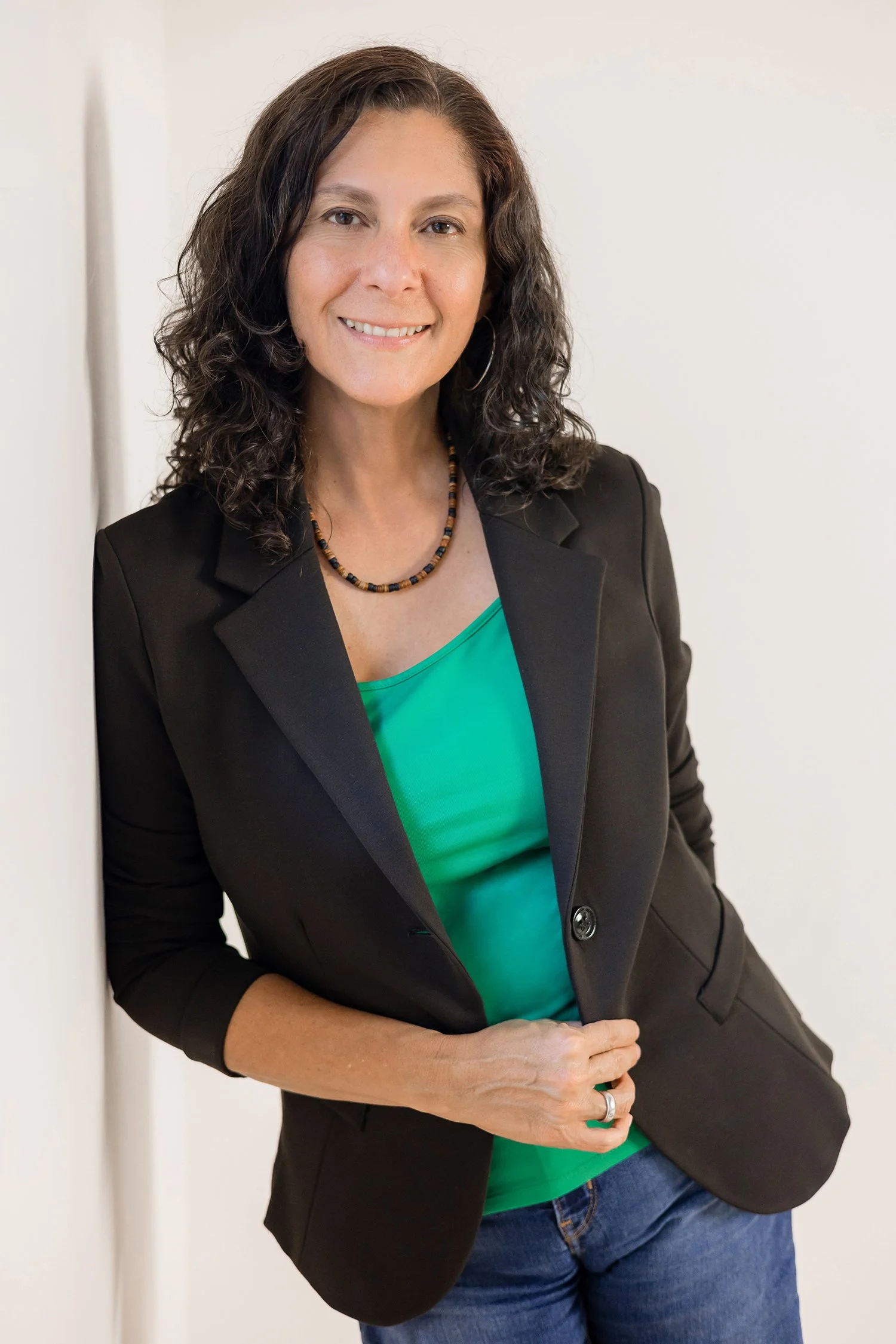
About Blanca
I'm a Personal Brand Strategist and TEDx Speaker helping accomplished experts become the go-to authority in their field.
You've already built the expertise. I bring the strategic positioning and visual identity to make sure the right people see it.
With 10+ years in corporate (Siemens, Nestlé, Gates Foundation) and a Master's in Marketing, I understand both the corporate world and the journey of building a business around your expertise. That's what makes my approach different.
I speak on Personal Branding, Visual Identity, Thought Leadership in the AI Era, Entrepreneurship as an Expat, and The Power of Reinvention.
Ready to become the go-to authority in your field?