Blog 88: Stop Waiting for Your Work to Speak for Itself
Why strategic positioning sits at the foundation of getting your work be seen
I Google myself often… I also look up what LLM’s (i.e. Claude, Gemini, ChatGPT and Perplexity) have to say about me.
No, I am not full of myself. But I want to know what people see when they search my name.
And I'd guess you've done the same. Have you typed your own name into that search bar, curious about what you would find? Or haven’t you?
What comes up isn't the whole picture, is it?
Since searchability has started moving from only search engines like Google, to LLM’s I have started working on curating my online presence even more.
When I start working with a client’s visibility, the first thing I will do in go through that exercise before even doing anything else.
And what I find… OMG!
Maybe a LinkedIn profile you haven't touched in a while. A mention from an event a few years back. Nothing that says, clearly, this is the person to call. A resumé of what you used to do 10 years ago.
Here's what's frustrating about that. You're not new at this. You've got 15, 20, 25+ years of experience behind you. You've solved complex problems, you’ve learned to see patterns others in your field would not recognize. You know your stuff and you know it well.
So why do people with less experience keep landing the opportunities that you wish you had? The keynote? The premium client? The podcast interview?
I want to be honest with you here, those things don't just land on someone's lap.
There's real work behind getting a keynote invitation or a premium client... outreach, relationships, showing up consistently, developing a body of work, of thought leadership that communicates your expertise.
I'm not saying the less experienced person did nothing. Maybe they had the right connections, maybe they raised their hand and asked for the opportunity, maybe they established themselves in a niche that is so new and unique that there is not a lot of competition.
What I am saying is this: if two people are doing similar work to get in front of the right people, and one of them is clearly, sharply positioned, and the other isn't or is quietly waiting to be approached… then clear positioning + visibility wins more often.
We Don't Give Positioning Nearly Enough Thought
Here's something I see constantly, with many experts I get to know:
Not giving enough thought, enough consideration to their own positioning.
Many land on some sort of positioning early in their career or founder journey... a way of describing what they do... and then they leave it there.
Positioning is treated like it's supposed to be permanent. Fixed, like it is something you set once and never touch again. What a misconception!
Instead, positioning needs to be in evolution. Positioning does need to be clear, but it doesn't need to be static forever. It needs to evolve, right alongside you, but only as you offer changes, the market shifts, and the knowledge of the ideal customer is sharpened. It needs to be permanent enough that it sticks and flexible enough that it evolves.
This is something April Dunford has spent years studying, mostly in the world of companies and products, not personal brands. But I believe that the pattern holds just as true for a personal brand as much as it does for a product.
She's written about how most businesses never actually choose their positioning. They default into it. And they keep running that default long after the product... or in your case, your personal brand... has changed.
Here's a line of hers worth sitting with:
“We stick with a default positioning even when the product or the market changes... because we’ve never been taught that positioning is a deliberate business choice”
Because positioning is just as much what you say no to, as to what you say yes to. Saying yes to a lot of things (types of clients, products, markets, etc…) only dilutes more your efforts and make people more confused as to what you actually do.
You're Still Describing Yourself as Who You Used to Be
I see this all the time. Someone is still describing themselves based on a job title they don't hold anymore. Or the role they used to play at the company they founded, before it grew into something else.
And it's not that they're lying. It's that they never took the time to sit down and ask: has this actually kept up with who I've become? Or even more importantly, does it evolve towards who you are becoming? Are you with your positioning communicating the vision of where you are going?
Positioning Is the Box People Put You In
Here's the part I really want you to get.
Positioning isn't really about what you say about yourself. It's about the “box” people sort you into, in their own head, the moment they learn who you are.
This is how our brains work.
When someone meets you, or hears about you, their mind automatically starts categorizing. What do you do. What kind of expert are you. What box do you belong in. People need somewhere to file you.
Al Ries and Jack Trout wrote about this decades ago in Positioning: The Battle for Your Mind, and the title says it all... positioning isn't a battle for attention. It's a battle for a spot in someone's mind. The question isn't whether you'll be put in a box. You will be. The only question is whether you actively manage the communication that helps people decide which box, or whether it happens to you by accident.
I don’t know about you, but I would much rather choose myself, on what I want to be known for.

Why is it so difficult to see your own positioning?
You know your own expertise so well that you've stopped seeing what actually makes it distinctive.
What feels completely obvious to you, “well, of course I approach it this way,” is often exactly the thing that would make someone else stop and say, “wait, nobody else does it like that.” You just can't see it from where you're standing.
Think about a racehorse wearing blinders. They serve a purpose... they keep the horse focused, running straight ahead. But they also mean the horse can't see anything to the sides. Can't see what's shifting in the field around it.
That's what happens when you've been working in your field, building expertise for years. You get incredible at running straight ahead. And you lose the ability to see sideways... to notice how the market's moving, how your own expertise has grown, where you actually stand out now versus five years ago. What makes you unique and differentiated.
This is exactly why outside input matters so much here. Someone without your blinders on can see what you genuinely cannot.
Now, waiting for your work to speak for itself is not strategic, it is a recipe for staying invisible.
Why Clear Positioning Changes Everything
Clear positioning changes how you see yourself. And it changes how everyone else sees you too.
This isn't about landing on a clever tagline. It's about being able to genuinely answer three questions:
What do you want to be known for?
Who are you actually serving?
And what do you know, or do, differently than everyone else claiming to do the same thing?
Answer those honestly, and you've got real differentiation. And once that's clear, it cascades to everything else: how you communicate, what kind of opportunities to pursue, what clients you say yes to.
It gives your content cohesiveness... a clear line running through it, one that connects naturally to your thought leadership instead of feeling like a random collection of posts.
It gives your network the words to describe you accurately. If someone tried to refer to you right now, could they do it in one sentence? If they can't, neither can anyone else.
And it's what makes people remember you after they meet you. A talk, an introduction at a conference, a conversation over coffee... all of it lands differently when there's something real and unique underneath it.
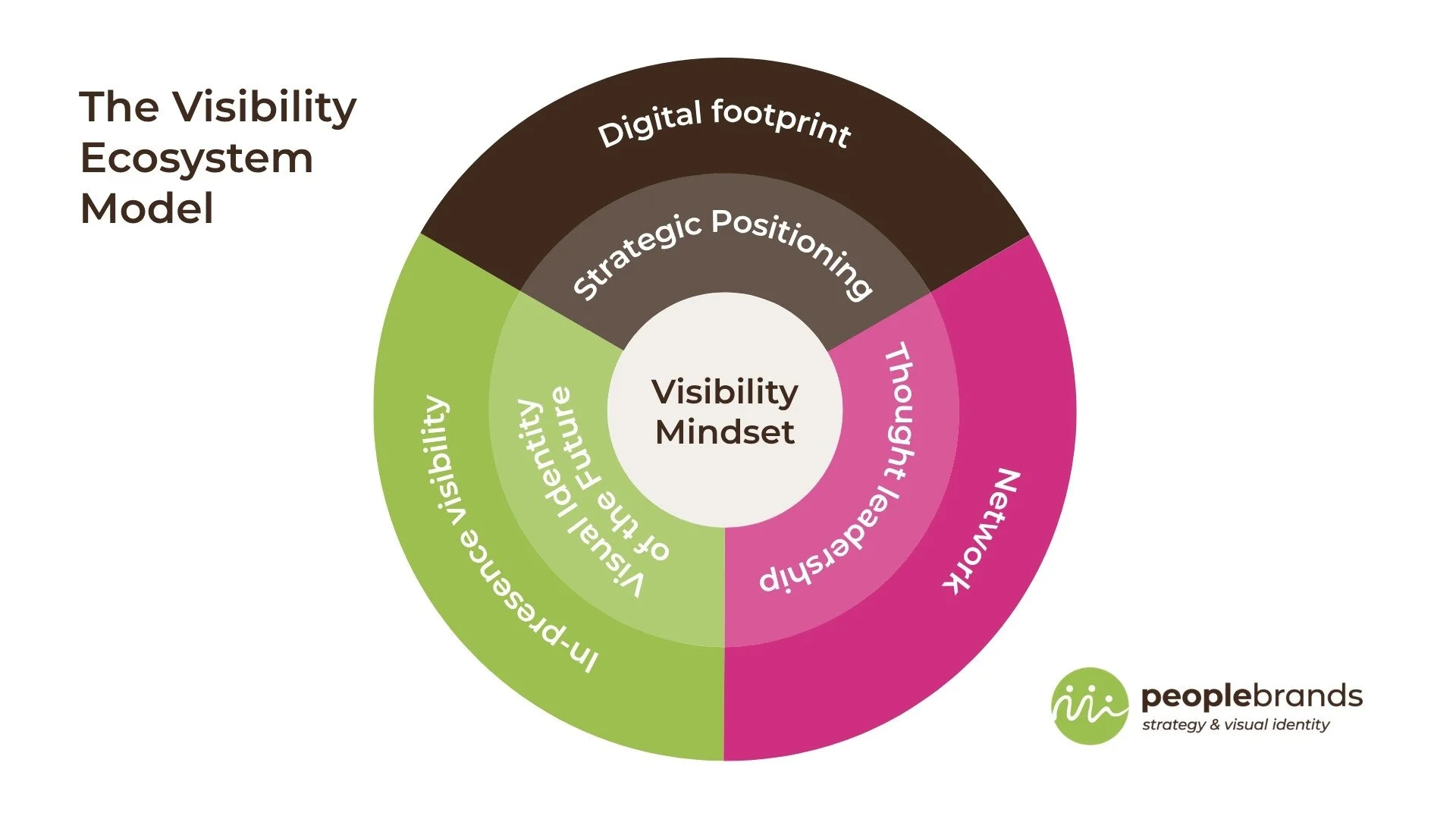
Following the peoplebrands Visibility Ecosystem, after having the right “Visibility Mindset”, nailing the “Strategic Positioning” is the next thing you need to understand and get right.

I can't stress this enough. It is one of the most undervalued pieces of the entire visibility puzzle. People pour energy into content, into photos, into showing up more, without ever fixing the thing underneath all of it.
A few years ago, I reached a plateau with my business, no matter what I did, it did not grow. I had been servicing two areas of photography: Personal Brand Photography and Family Photography. I was spread too thin, my message was mixed. People contacted me for all sorts of photography, even if it was not on my website, I was simply: a photographer.
Until something changed. I hired a business coach, who “forced me” to make the decision I had been dreading… to let go of one side of the business.
It was scary, as the revenue was a 50/50 split. So letting go of one of them meant halving my business. What happened next shocked me.
Within a year, my business DOUBLED.
Here’s the thing. I knew this. This concept was not new to me. The problem was, I was too emotionally involved to take the risk, to see my own blindspots.
As you might imagine, I decided to focus my business on Personal Branding, I went beyond photography, I brought in my branding know-how and re-designed my business to add other services that complement the Personal Brand photography.
Now I had one Strategic Positioning as my foundation, I had one customer I was serving and I knew how to show up in messaging and how to align my visual branding to this positioning.
So I started helping my clients do the same with their Personal Brands by developing the Visibility Ecosystem and the S.H.I.N.E. Personal Brand Program
Positioning Is What Makes You Top of Mind
So why does any of this matter beyond feeling clearer?
Because clear positioning is what makes top of mind recognition actually possible.
Top of mind means being the name that surfaces first when someone asks for a reference to someone who does what you do.
There is nothing more powerful to earn trust than a recommendation, from someone who knows you.
“Top of Mind” is built through repetition and being consistent over time. This consistency compounds over time.
If your positioning is muddy, repeating it just means people stay confused about you, more often. More posts, more content, more noise... none of it helps if there's no clear message underneath.
Once your positioning is sharp, repetition becomes one of your most important tools.
And that repetition is not limited to just your words, or the topics that you write about.
It shows up in other types of consistency: the same visual branding across your platforms and formats, a recognizable tone of voice whether you're writing or speaking, showing up on video regularly so people start to recognize not just your name, but your face and how you sound.
All of that consistency, layered together, is what makes you memorable.
That's the connection. Positioning gives people something clear to remember. Consistency is what makes sure they actually do.
Where This Sits in Your Visibility Ecosystem
Strategic Positioning is one of the 7 dimensions in the Visibility Ecosystem I use with clients, sitting alongside Digital Footprint, Thought Leadership, Network, In-Presence Visibility, and Visual Branding, all of it anchored by the Visibility Mindset at the center.
Most of the experts I work with are strong in two or three of these. Almost nobody starts strong across all seven. And nearly every gap I find traces back to positioning being unclear first.
Where to Go From Here
You've already done the hard part. The expertise is real, and it's not in question.
What's in question is whether people can actually describe what makes you different, in one clear sentence, without hesitating.
That's exactly what the Personal Brand Visibility Scorecard is built to show you where your gaps are. It takes you through all seven dimensions and gives you a clear picture of where you're strong and where the gaps are... whether that's positioning, or somewhere else entirely.
Because when your positioning isn't clear, everything downstream gets confusing. Your content feels scattered. Your network can't refer to you properly. People remember that you're impressive, without remembering exactly why, or what to call you when the right opportunity comes along.
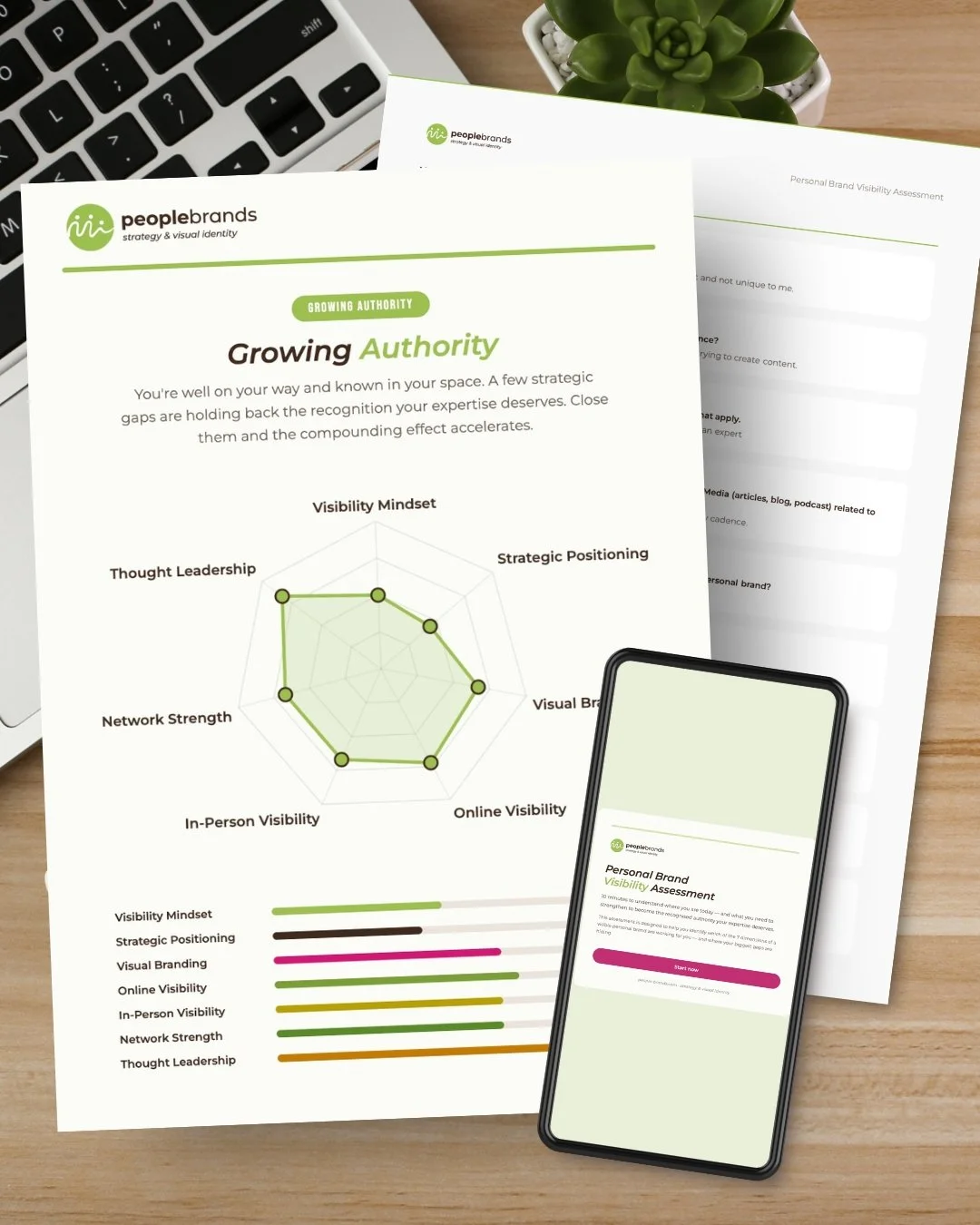
Take the Scorecard and find out exactly where to focus first.
Measure your Personal brand across the 7 Areas that separate good experts from recognized authorities.
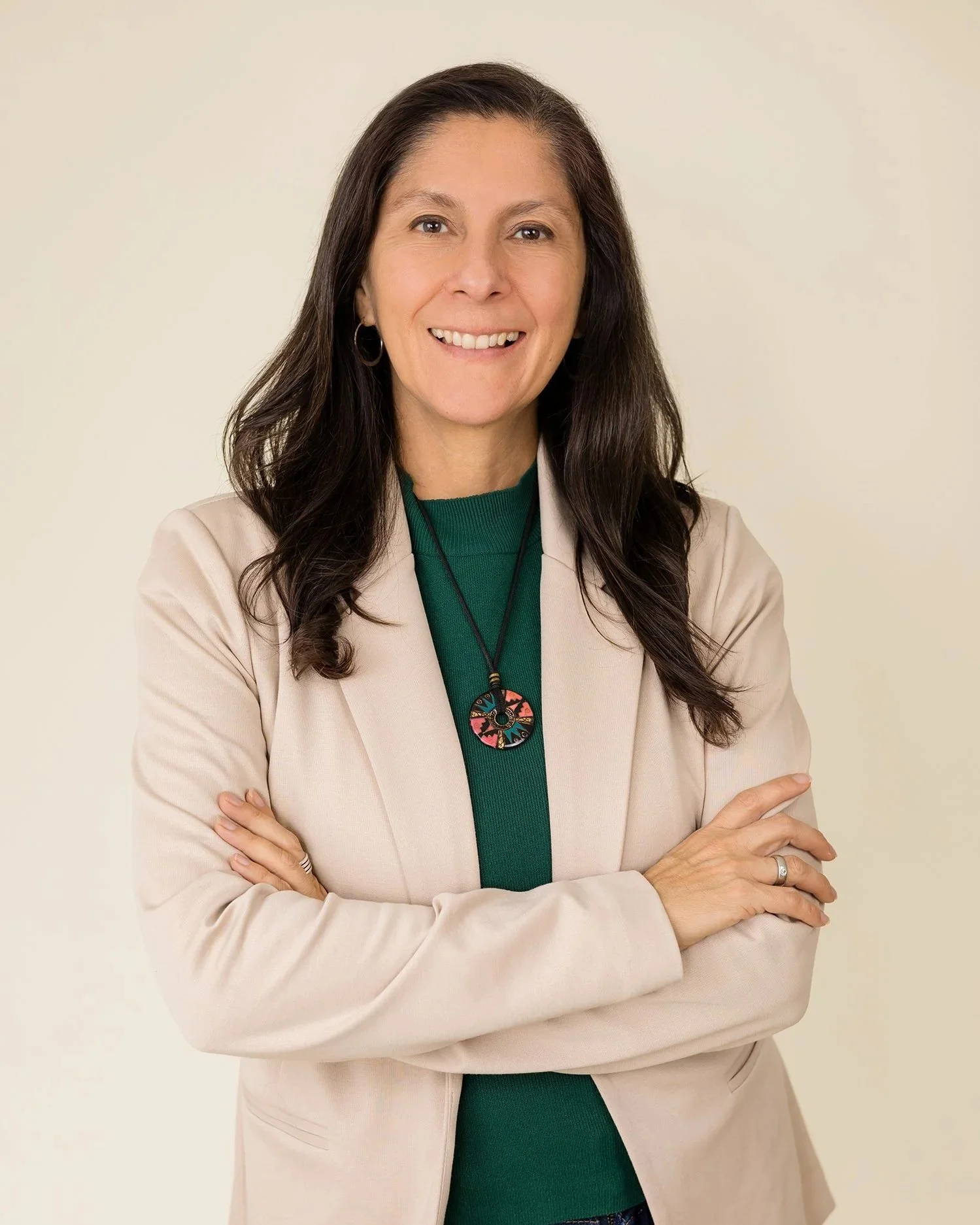
About Blanca
I'm a Personal Brand Strategist and TEDx Speaker helping accomplished experts become the go-to authority in their field.
You've already built the expertise. I bring the strategic positioning and visual identity to make sure the right people see it.
With 10+ years in corporate (Siemens, Nestlé, Gates Foundation) and a Master's in Marketing, I understand both the corporate world and the journey of building a business around your expertise. That's what makes my approach different.
I speak on Personal Branding, Visual Identity, Thought Leadership in the AI Era, Entrepreneurship as an Expat, and The Power of Reinvention.
Ready to become the go-to authority in your field?